
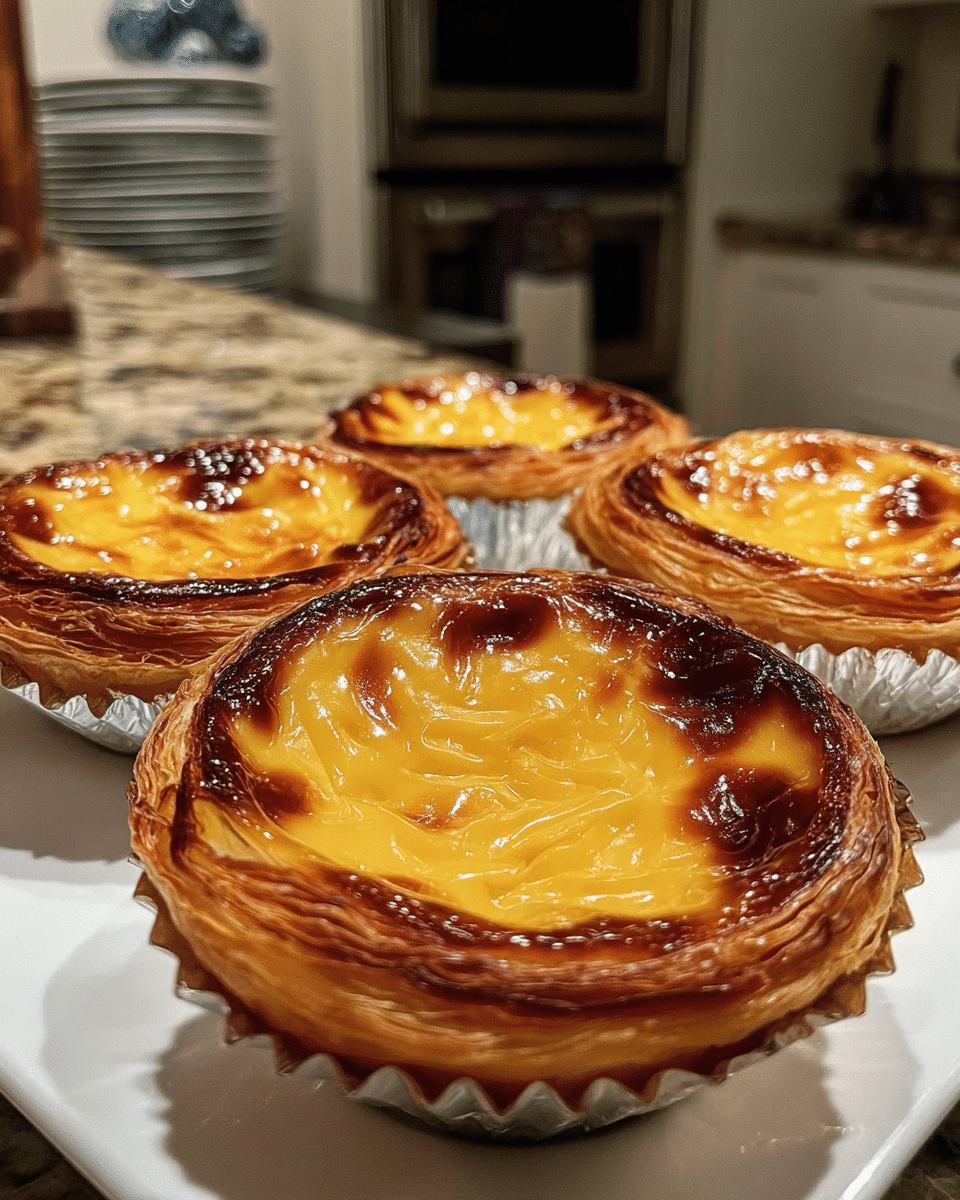
Are you tired of desserts that lack a true cultural story behind them? Portugal’s pastel de nata offers not just a heavenly taste experience but centuries of rich history in every bite. These golden custard tarts with their perfectly caramelized tops and flaky crusts will transport you straight to the charming streets of Lisbon with just one taste.
Hi, I’m Emma, the heart behind GusRecipes, and my first encounter with pastel de nata during a trip to Portugal changed my perspective on what a truly exceptional pastry could be. Having spent years perfecting this recipe in my own kitchen, I’ve captured the authentic taste while making it accessible for home bakers.
In this guide, I’ll share the fascinating origin story of these iconic tarts, how to achieve that perfect custard consistency, master the delicate pastry, and serve them as the Portuguese do. Whether you’re planning a trip to Portugal or wanting to bring a taste of its culture to your table, this beloved treat deserves a place in your baking repertoire.
Why This Pastel de Nata Recipe Works
- Uses simple, pantry-friendly ingredients that create complex flavors
- Breaks down the intimidating technique into manageable steps
- Perfect balance of sweet custard and crisp, flaky pastry
- Authentic Portuguese flavor without requiring specialized equipment
- Works for both special occasions and weekend baking projects
Choosing the Right Ingredients for Pastel de Nata
The Essential Custard Components
The soul of pastel de nata lies in its silky custard. Traditional recipes use egg yolks, sugar, milk, and a hint of cinnamon and lemon. The quality of your egg yolks makes a significant difference look for those with a deep yellow or orange color for the richest flavor and color.
Pastry Selection for Pastel de Nata
While traditional Portuguese bakeries make their own specialized dough, you can achieve excellent results with good-quality store-bought puff pastry. For the most authentic texture, seek out all-butter puff pastry, which delivers that signature crispness and rich flavor.
Flavor Enhancers
A true pastel de nata gets its distinctive taste from subtle aromatic additions. Cinnamon sticks infused in the milk (rather than ground cinnamon) and fresh lemon peel (not juice) create the classic flavor profile without overwhelming the delicate custard.
Ingredients & Prep for Perfect Pastel de Nata
Custard Base Preparation
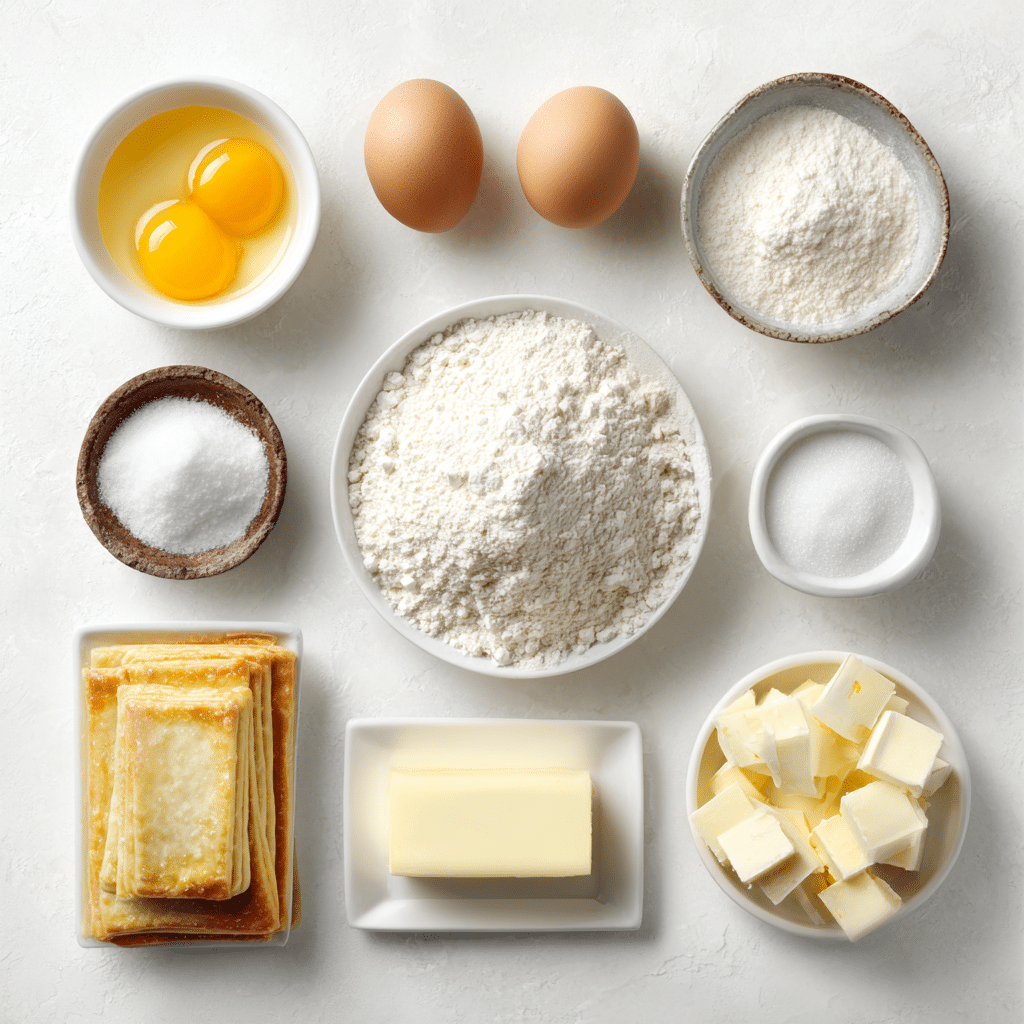
- 6 egg yolks (room temperature)
- 1 cup granulated sugar
- ¼ cup all-purpose flour
- 2 cups whole milk
- 1 cinnamon stick
- 1 lemon peel (no white pith)
- 1 teaspoon vanilla extract
- Pinch of salt
Pastry Preparation
- 1 package (about 14 oz) all-butter puff pastry
- Flour for dusting
- Butter for greasing tins
Equipment Necessities
- 12-cup muffin tin (traditional Portuguese tins are ideal but not essential)
- Heavy-bottomed saucepan
- Candy thermometer (for perfect sugar temperature)
- Sieve for straining custard
Step-by-Step Cooking Instructions for Pastel de Nata
Pre-Cooking Prep for Pastel de Nata
- Remove puff pastry from refrigerator 20 minutes before using to slightly soften.
- Preheat your oven to its maximum temperature (usually 475-500°F/250-260°C).
- Place a baking sheet in the oven while preheating – this helps create the intense bottom heat needed.
- Grease your muffin tins thoroughly to prevent sticking.
Pastel de Nata Pastry Technique
- Roll out the puff pastry into a rectangle, keeping it thin but not transparent.
- Starting from the long edge, roll the pastry tightly into a log.
- Trim the uneven edges, then cut into 12 equal pieces (about 1-inch thick).
- Place each piece cut-side down in your palm and flatten with your thumb.
- Press the flattened disc into a muffin cup, working the dough up the sides with your thumbs. The pastry should be thin but without holes.
- Refrigerate the prepared cups while making the custard.
Pastel de Nata Custard Cooking
- In a saucepan, bring milk, cinnamon stick, and lemon peel to a simmer, then remove from heat and let infuse for 10 minutes.
- In a separate bowl, whisk sugar, flour, and salt until combined.
- Slowly add the warm milk mixture (strained to remove cinnamon and lemon) to the dry ingredients, whisking continuously.
- Return mixture to the pan and cook over medium heat, stirring constantly until thickened.
- Let the mixture cool slightly before whisking in the egg yolks one at a time.
- Add vanilla extract and stir to combine.
Final Pastel de Nata Assembly and Baking
- Fill each pastry cup about ¾ full with the custard mixture.
- Place the filled tins on the preheated baking sheet in the oven.
- Bake for 12-15 minutes until the pastry is golden and the tops develop dark caramelized spots.
- Let cool in the tin for 5 minutes before transferring to a wire rack.
Pro Tips for Perfect Pastel de Nata
Achieving Authentic Pastel de Nata Texture
- Temperature is crucial your oven must be extremely hot to create the signature caramelization.
- Don’t overfill the tarts; the custard will rise during baking and could overflow.
- The custard should still have a slight wobble when you remove it from the oven – it will continue to set as it cools.
Essential Pastel de Nata Tools
- Traditional Portuguese tart molds are fluted metal cups with flat bottoms if available, these create the most authentic shape.
- A good thermometer helps ensure your custard reaches the right consistency.
- A fine mesh strainer is essential for the silkiest custard texture.
Storage Guidelines for Pastel de Nata
- These tarts are best enjoyed the day they’re made, preferably while still warm.
- If necessary, store at room temperature for up to 24 hours.
- While not ideal, you can refrigerate them for up to 2 days bring to room temperature or warm briefly in the oven before serving.
Looking for more Portuguese-inspired recipes? Check out my collection of Mediterranean desserts on Pinterest for more sweet inspirations that will transport your taste buds abroad!
Pastel de Nata Flavor Variations
Regional Pastel de Nata Differences
Pastel de nata has inspired variations across Portugal and beyond. Here’s how different regions adapt this classic:
| Region/Country | Variation | Key Difference |
|---|---|---|
| Belém (Lisbon) | Pastel de Belém | Secret recipe with distinctive caramelization |
| Azores | Queijadas | Includes fresh cheese in the custard |
| Brazil | Pastel de Santa Clara | Often uses coconut in the filling |
| Macau | Macanese Egg Tart | More egg-forward with a cookie-like crust |
| Northern Portugal | Pastel de Viana | Includes cinnamon in both filling and topping |
Modern Pastel de Nata Twists
- Citrus Infusions: Try orange zest instead of lemon for a different aromatic profile
- Spice Variations: Add a pinch of cardamom or nutmeg to the custard for complexity
- Chocolate Addition: A thin layer of dark chocolate between pastry and custard
- Almond Touch: A few drops of almond extract enhance the custard’s depth
Dietary Adaptations for Pastel de Nata
- Dairy-Free Option: Substitute coconut milk for whole milk (alters flavor but works)
- Lower Sugar Version: Reduce sugar by ¼ and add a touch of honey for sweetness
- Gluten-Free Pastry: Use a gluten-free puff pastry alternative (though texture differs)
Serving Suggestions for Pastel de Nata
- Traditional Portuguese Style: Enjoy with a strong espresso (bica) or a galão (similar to a latte)
- Accompaniments: Dust with powdered cinnamon and powdered sugar just before serving
- Temperature: Best served warm or at room temperature, never cold from the refrigerator
- Presentation: For gatherings, display on a tiered stand dusted with cinnamon
- Time of Day: In Portugal, these are enjoyed any time breakfast, afternoon snack, or dessert
FAQs About Pastel de Nata
Can I make pastel de nata ahead of time?
While best enjoyed fresh, you can prepare the custard mixture up to 2 days ahead and keep refrigerated. The pastry cups can also be prepared a day in advance and kept refrigerated until filling and baking.
Why did my pastel de nata custard overflow during baking?
Overfilling is usually the culprit. Fill pastry cups only about ¾ full, as the custard will rise during baking. Also, ensure your oven temperature is high enough to quickly set the top.
How do I get those characteristic black spots on top?
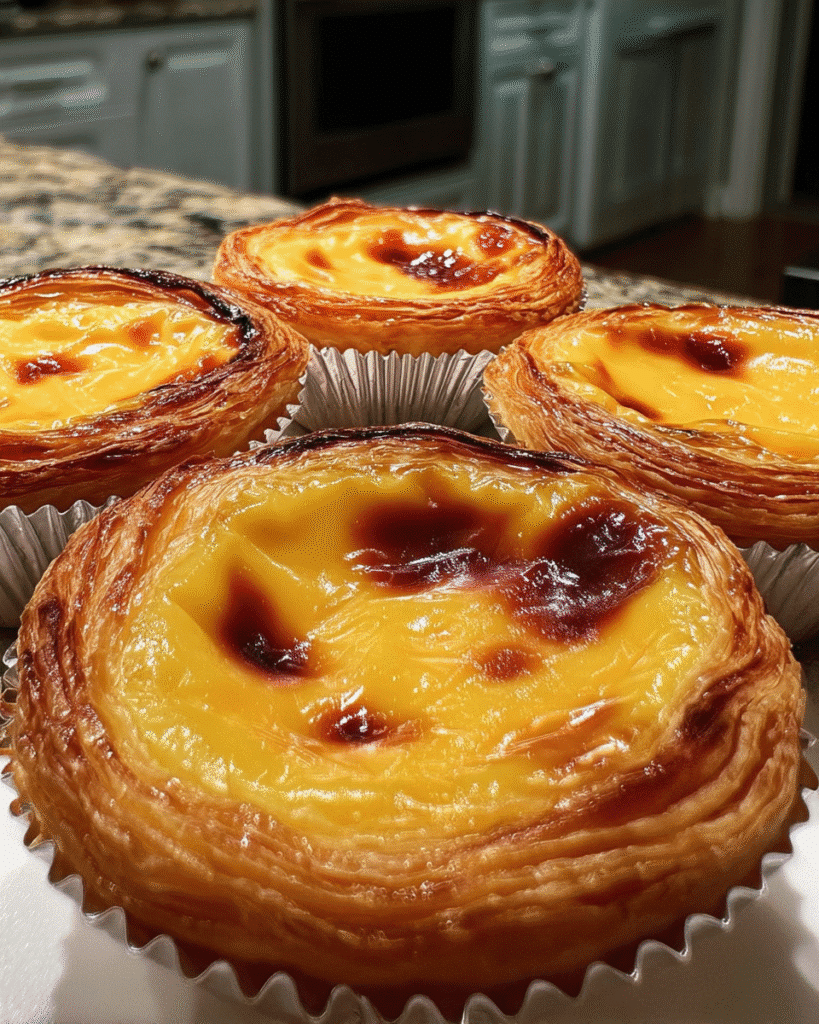
The dark spots come from caramelization at high temperatures. Make sure your oven is fully preheated to its maximum temperature, and consider using the broiler for the last minute of baking (watching carefully to prevent burning).
Can I freeze unbaked pastel de nata?
It’s not recommended to freeze the unbaked tarts as the custard texture will suffer. However, you can freeze the baked and cooled tarts for up to 1 month. Thaw at room temperature and reheat in a hot oven for a few minutes to crisp up.
What’s the difference between pastel de nata and pastel de Belém?
Pastel de Belém is the trademarked version made exclusively at the Pastéis de Belém bakery in Lisbon, following a secret recipe from the Jerónimos Monastery. All other versions are called pastel de nata, though the differences are subtle to most tasters.
Conclusion
The journey of pastel de nata from monastery kitchens to international sensation mirrors Portugal’s rich culinary heritage. These golden custard tarts represent more than just a sweet treat they’re a cultural emblem that has stood the test of time through centuries of social change.
What makes these tarts so enduring is their perfect balance of simplicity and technique. The combination of flaky, buttery pastry with silky, caramelized custard creates a dessert that’s greater than the sum of its humble parts.
I hope this guide inspires you to bring a taste of Portugal into your kitchen. There’s something deeply satisfying about mastering these iconic tarts, connecting with culinary traditions that span oceans and generations. So turn up your oven, embrace the process, and treat yourself to Portugal’s sweetest obsession!
Don’t forget to share your pastel de nata creations with our community by tagging #GusRecipes on social media. Your Portuguese pastry journey is just beginning!
Print
How Pastel de Nata Became Portugal’s Sweetest Obsession
- Total Time: 35 mins
- Yield: 12 tarts 1x
- Diet: Vegetarian
Description
A beloved Portuguese custard tart featuring flaky, buttery puff pastry filled with creamy, caramelized custard the iconic Pastel de Nata is a golden, sweet treat with a hint of cinnamon and citrus.
Ingredients
1 sheet puff pastry, thawed
1 cup whole milk
3 tbsp all-purpose flour
1 cup granulated sugar
1/2 cup water
1 cinnamon stick
1 strip lemon peel
6 large egg yolks
Powdered sugar and ground cinnamon, for dusting
Instructions
1. Preheat oven to 475°F (245°C) and grease a 12-cup muffin tin.
2. Roll out puff pastry and cut into 12 rounds to fit the muffin tin cups. Press into cups and chill while making the custard.
3. In a small saucepan, whisk together milk and flour until smooth. Cook over medium heat, stirring constantly, until thickened. Remove from heat.
4. In another pan, combine sugar, water, cinnamon stick, and lemon peel. Boil without stirring until syrup reaches 220°F (104°C). Remove from heat and discard cinnamon and lemon peel.
5. Slowly whisk sugar syrup into the milk mixture.
6. In a bowl, lightly whisk the egg yolks, then gradually add the warm milk mixture while whisking.
7. Strain custard through a sieve to remove lumps.
8. Pour the custard into the chilled pastry cups, filling almost to the top.
9. Bake for 12–15 minutes, or until the tops are caramelized and the pastry is crisp.
10. Let cool slightly, then dust with powdered sugar and cinnamon before serving warm.
Notes
Traditional Pastéis de Nata are baked at very high heat to achieve caramelized tops — don’t be afraid of a little browning!
For extra authenticity, use a touch of vanilla or a bit of lemon zest in the custard.
Best enjoyed fresh from the oven with a cup of espresso or coffee.
- Prep Time: 20 mins
- Cook Time: 15 mins
- Category: Dessert, Pastry
- Method: Baked
- Cuisine: Portuguese
Nutrition
- Serving Size: 1 tart
- Calories: 210
- Sugar: 17g
- Sodium: 90mg
- Fat: 12g
- Saturated Fat: 6g
- Unsaturated Fat: 5g
- Trans Fat: 0g
- Carbohydrates: 20g
- Fiber: 0g
- Protein: 4g
- Cholesterol: 120mg
Keywords: pastel de nata, portuguese custard tart, pasteis de nata, egg tart