
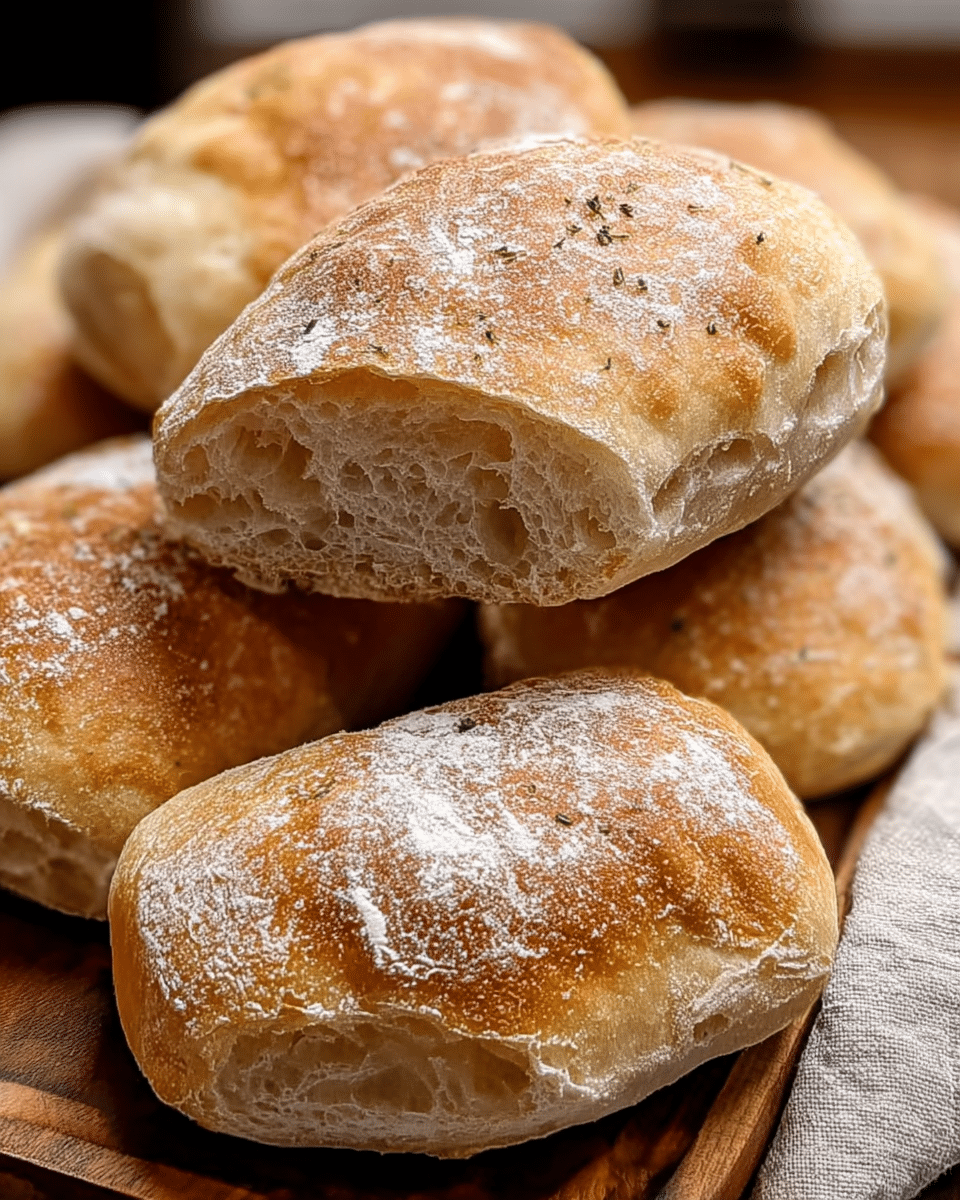
Are you tired of dense, flat homemade bread that doesn’t have those beautiful air pockets you see in bakery ciabatta? Many home bakers struggle to achieve that perfect open crumb and crispy crust that makes ciabatta so special. But don’t worry with the right techniques, you can create bakery-quality ciabatta right in your own kitchen!
As someone who’s spent countless hours perfecting the art of ciabatta bread, I’ve discovered the secrets that transform a simple combination of flour, water, yeast, and salt into that rustic Italian loaf we all love. Here at GusRecipes, I’ve tested dozens of methods to bring you only what truly works.
In this comprehensive guide, I’ll walk you through everything you need to know about ciabatta bread – from selecting the right flour to mastering high-hydration dough. We’ll cover fool-proof mixing techniques, proper fermentation, and the baking methods that ensure a crackling crust every time.
Why This Ciabatta Bread Recipe Works
- Uses accessible ingredients while maintaining authentic texture and flavor
- High hydration dough creates those signature irregular air pockets
- Long fermentation develops complex flavor with minimal hands-on time
- Versatile recipe that works for sandwiches, dipping oils, or alongside soups
Choosing the Right Ingredients for Ciabatta Bread
Best Flour for Ciabatta Bread
For authentic ciabatta, bread flour is your best friend. Its higher protein content (typically 12-14%) develops the strong gluten network needed to trap air and create that open, airy structure. While all-purpose flour can work in a pinch, your ciabatta will have a more closed crumb and less chewy texture. For truly authentic results, try finding Italian “00” flour, which creates an exceptionally light texture.
Water Quality and Temperature for Ciabatta Bread
Ciabatta requires a high hydration level (typically 75-85% water to flour ratio). Use filtered water at room temperature or slightly warm (about 75-80°F) to help activate the yeast without killing it. The temperature of your water significantly impacts fermentation speed.
Yeast Selection for Ciabatta Bread
While instant yeast is convenient, a small amount of active dry yeast allows for slower fermentation and better flavor development. For the most traditional approach, consider making a biga (pre-ferment) the night before with just a pinch of yeast.
Ingredients & Prep for Perfect Ciabatta Bread
Dough Preparation Essentials
The key to great ciabatta lies in minimal handling and proper hydration. You’ll want to:
- Measure ingredients by weight, not volume
- Mix just until ingredients are incorporated
- Use the stretch-and-fold technique instead of kneading
- Let the dough rest between folds to develop gluten naturally
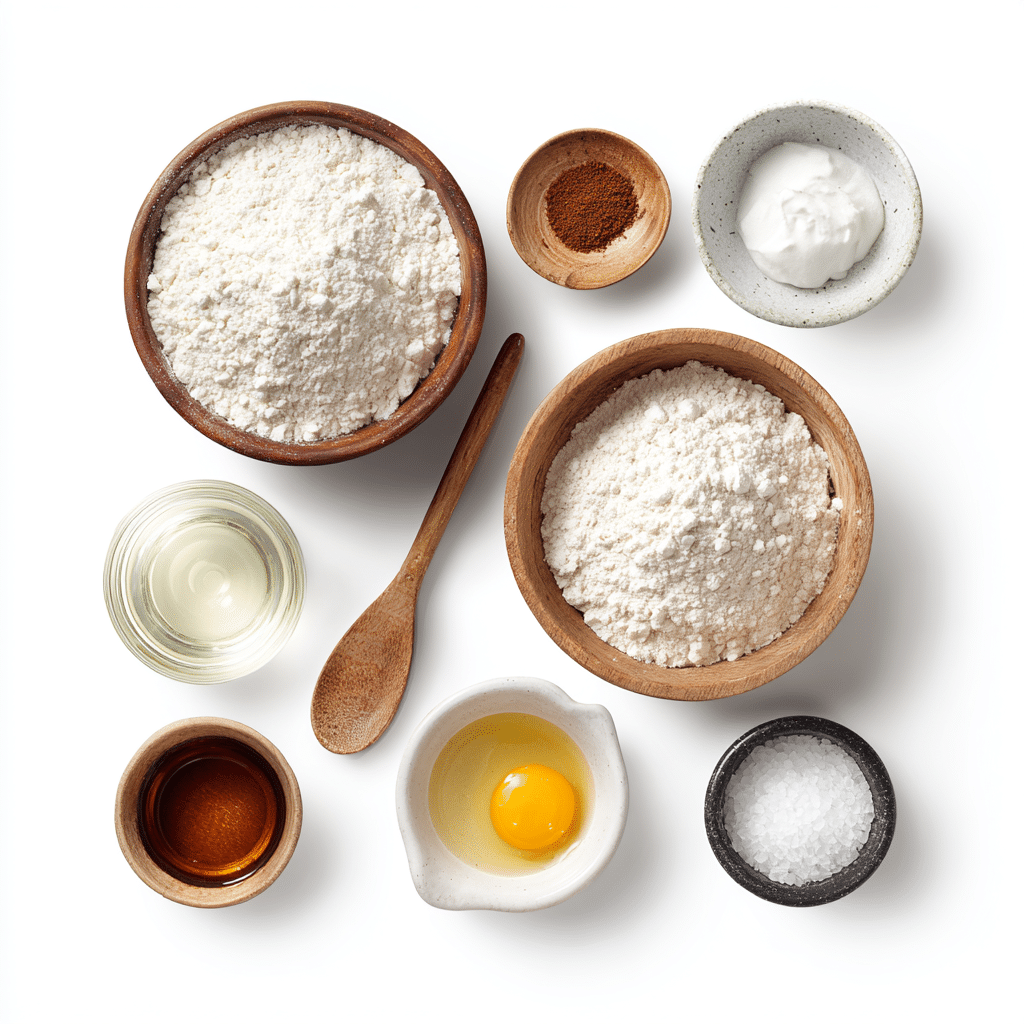
Basic Ciabatta Ingredients
- Bread flour
- Water (75-85% hydration)
- Salt (2% of flour weight)
- Yeast (minimal amount for slow fermentation)
- Optional: olive oil for flavor and extra tenderness
Equipment Necessities
- Digital kitchen scale
- Large mixing bowl
- Dough scraper (both flexible and bench)
- Baking stone or steel (preferred) or baking sheet
- Spray bottle for creating steam
Looking for more bread inspiration? Check out my Pinterest collection of artisan bread techniques where I share beautiful loaves and helpful tips!
Step-by-Step Ciabatta Bread Instructions
Pre-Baking Ciabatta Bread Preparation
- Mix flour and water with just a pinch of yeast, letting it sit for 15-20 minutes (this autolyse stage hydrates the flour)
- Add salt and remaining yeast, mixing just until incorporated
- Instead of kneading, perform a series of gentle stretch-and-folds every 30 minutes for 2-3 hours
- Let the dough bulk ferment until doubled in size (3-5 hours at room temperature or overnight in refrigerator)
Shaping Ciabatta Bread
- Using floured hands and a bench scraper, gently turn the dough onto a well-floured surface
- Cut into desired sizes, being careful not to deflate the air bubbles
- Gently stretch into rectangular shapes, maintaining the dough’s airy structure
- Transfer to well-floured parchment paper or a couche cloth
Baking Ciabatta Bread Method
- Preheat oven to 475°F (245°C) with baking stone or steel inside for at least 45 minutes
- Create steam by placing a pan of water in the bottom of the oven or using a spray bottle
- Gently transfer shaped dough onto the hot stone or steel
- Bake for 20-25 minutes until deeply golden and hollow-sounding when tapped
Cooling Ciabatta Bread
Allow loaves to cool completely on a wire rack before slicing (at least 1 hour). This crucial step allows the crumb structure to set and prevents gumminess.
Pro Tips for Perfect Ciabatta Bread
Handling High-Hydration Ciabatta Dough
- Keep your hands and work surface well-floured
- Use a dough scraper instead of your hands whenever possible
- Avoid the temptation to add more flour – embrace the stickiness!
- For easier handling, refrigerate the dough for 30 minutes before shaping
Creating Those Beautiful Air Pockets in Ciabatta Bread
- Never punch down the dough like with other bread recipes
- Handle the dough with extraordinary gentleness
- Use proper stretch-and-fold techniques to develop structure without degassing
- Ensure proper fermentation – look for bubbles on the surface and increased volume
Storage and Refreshing Ciabatta Bread
- Store at room temperature in a paper bag for 1-2 days
- Freeze sliced or whole loaves in airtight containers for up to 3 months
- Refresh stale bread by sprinkling with water and heating in a 350°F oven for 5-10 minutes
Flavor Variations for Ciabatta Bread
Herb and Garlic Ciabatta Bread
Add 2 tablespoons of fresh herbs (rosemary, thyme, or basil) and 2-3 minced garlic cloves during the final mix. The subtle infusion of herbs creates a wonderful aromatic loaf.
Whole Grain Ciabatta Bread
Replace up to 25% of the bread flour with whole wheat flour for a nuttier flavor and additional nutrition. Note that this will result in a slightly denser loaf.
Olive and Sun-Dried Tomato Ciabatta Bread
Fold in 1/2 cup each of chopped olives and sun-dried tomatoes after the second stretch-and-fold. These Mediterranean flavors transform the bread into a meal-worthy treat.
| Variation | Ingredients to Add | Best Paired With | Hydration Adjustment |
|---|---|---|---|
| Classic | None | Everything! | 80% standard |
| Herb & Garlic | 2 tbsp fresh herbs, 2-3 garlic cloves | Soups, dipping oils | No change |
| Whole Grain | 25% whole wheat flour | Hearty stews, cheese | +3-5% more water |
| Olive | 1/2 cup chopped olives | Mediterranean meals | -2% (olives add moisture) |
Serving Suggestions for Ciabatta Bread
Ciabatta bread’s airy texture and crisp crust make it perfect for:
- Dipping in high-quality olive oil and balsamic vinegar
- Creating substantial sandwiches that hold up to juicy fillings
- Serving alongside pasta dishes to soak up delicious sauces
- Toasting for crostini with various toppings
- Making the ultimate garlic bread
For an elegant Italian meal, serve warm ciabatta with a platter of roasted vegetables, fresh mozzarella, and basil-infused olive oil.
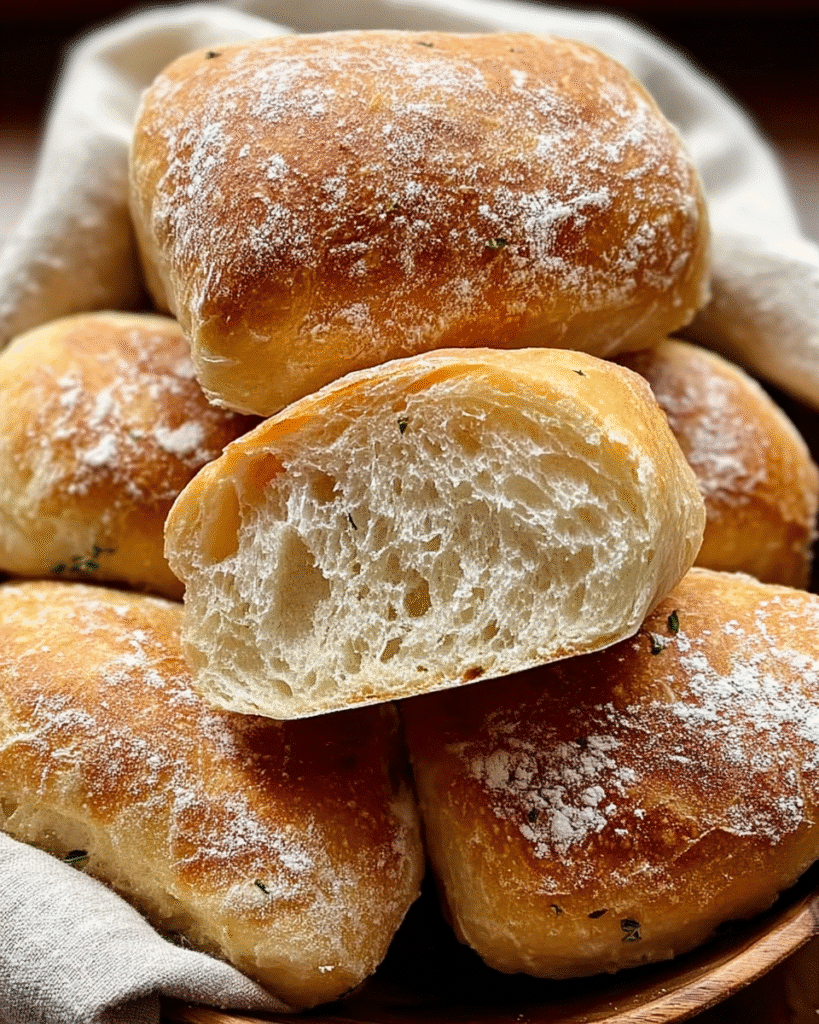
FAQs about Ciabatta Bread
Why is my ciabatta dense without air pockets?
The most common reasons are insufficient hydration, overmixing which degasses the dough, or not allowing adequate fermentation time. Remember that ciabatta requires a very wet dough and gentle handling.
Can I make ciabatta without a stand mixer?
Absolutely! Many bakers prefer making ciabatta by hand since it helps develop a feel for the dough. Use a Danish dough whisk or wooden spoon for initial mixing, then use the stretch-and-fold technique.
How can I create more steam in my home oven?
Place a cast iron pan on the bottom rack during preheating, then add ice cubes or boiling water when you put in the bread. Alternatively, spray the oven walls with water during the first 5 minutes of baking.
Can I refrigerate ciabatta dough overnight?
Yes, cold fermentation actually improves flavor! Shape the dough first, then cover and refrigerate. Allow it to come to room temperature (about 1-2 hours) before baking.
Conclusion
Mastering ciabatta bread at home is one of the most rewarding baking experiences. While it might seem challenging at first, remember that embracing the wet dough and having patience with the fermentation process are the keys to success. The first time you slice into your homemade loaf and see those beautiful irregular holes, you’ll understand why this Italian classic has captured the hearts of bread lovers worldwide.
Don’t be discouraged if your first attempt isn’t perfect each batch teaches you something new about the fascinating science of bread. I’d love to see your ciabatta creations and hear about your baking journey! Share your results and questions in the comments below.
Now, gather your ingredients, clear your schedule for a few hours of mostly hands-off time, and prepare to enjoy the incredible aroma of fresh ciabatta filling your home!
Print
Best Ciabatta Bread Secrets Home Bakers Need to Know
- Total Time: 3 hrs
- Yield: 1 large loaf 1x
- Diet: Vegan
Description
A classic Italian ciabatta bread with a chewy texture, crisp crust, and open crumb. Perfect for sandwiches, bruschetta, or serving warm with olive oil.
Ingredients
2 cups all-purpose flour
1 cup bread flour
1 1/2 cups warm water (about 100°F / 38°C)
1 tsp instant yeast
1 tsp salt
1 tbsp olive oil (optional for brushing)
Instructions
1. In a large bowl, mix warm water and yeast. Let sit for 5 minutes until slightly foamy.
2. Add the flour and salt. Stir with a wooden spoon until a sticky dough forms.
3. Cover the bowl and let rise for 1 hour at room temperature.
4. Using wet hands, stretch and fold the dough from each side into the center. Repeat this process every 30 minutes for 2 hours to build gluten strength.
5. After the final fold, cover and let rise until doubled in size (about 1 hour).
6. Preheat oven to 450°F (230°C). Line a baking sheet with parchment paper and sprinkle with flour.
7. Gently transfer the dough onto the sheet, shaping it into a rough rectangle without deflating too much.
8. Bake for 20–25 minutes, or until golden brown with a hollow sound when tapped.
9. Cool completely on a wire rack before slicing.
Notes
For extra flavor, refrigerate the dough overnight before baking.
Add herbs or roasted garlic for a savory twist.
Best enjoyed the same day but can be refreshed in the oven for a few minutes before serving.
- Prep Time: 15 mins (plus resting time)
- Cook Time: 25 mins
- Category: Bread
- Method: Baking
- Cuisine: Italian
Nutrition
- Serving Size: 1 slice (1/10 loaf)
- Calories: 180
- Sugar: 1g
- Sodium: 190mg
- Fat: 2g
- Saturated Fat: 0g
- Unsaturated Fat: 2g
- Trans Fat: 0g
- Carbohydrates: 35g
- Fiber: 1g
- Protein: 6g
- Cholesterol: 0mg
Keywords: ciabatta bread, artisan bread, no knead ciabatta, Italian loaf